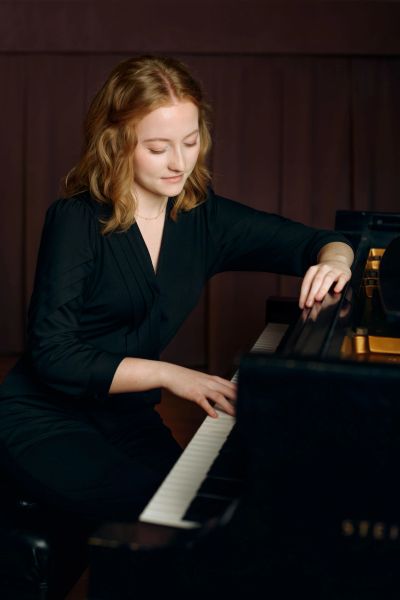
My Teaching Philosophy
Ashley Frye
I teach music because every student deserves access to clear, high-quality instruction that develops not only technical skill but also confidence, independence, and problem-solving ability. Music is a discipline that enriches life in lasting ways, and I view it as my responsibility to make that experience meaningful, rigorous, and accessible. Regardless of whether or not students continue study at their instrument, having studied it opens the door to all other musical endeavors, as my lessons provide students a strong foundation in music theory which can be brought to any instrument.
My philosophy is based on three core values: clarity, adaptability, and respect. These values shape how I introduce material, how I give feedback, and how I set goals with students. I see myself as a facilitator and musical guide rather than a lecturer/educator. In the lesson environment, the student and I are equals working towards the goal of improvement together. For this environment to thrive, I pay the student the same respect I expect to receive myself by meeting them at their level both musically and through our communication with one another. In all lessons, I ensure students understand concepts well enough to apply them later, and help them connect daily practice to larger musical goals.
Teaching Strategies and Classroom Environment
Each lesson is tailored to the individual. Method books often provide a foundation in my lessons and are used in conjunction with other materials to meet the needs and goals of the student. For more advanced students, pieces are chosen based on the educational needs and interests of the student without the use of method books. A healthy foundation in musical tradition is instilled in all students through consistent technical exercises, a theoretical analysis of pieces worked on in lessons, and a focus and discussion of the works of great classical composers.
Problem-solving is a central part of my teaching. If one solution doesn’t work, I will work with the student until we find one that does. My goal is not for a student to “get through” material but to understand it well enough to reproduce the process in multiple contexts later. For recitals, I teach goal-setting directly by breaking large projects into smaller, manageable steps with timelines that we set together.
For younger students, I use movement, storytelling, and creative games (at and away from the piano) to build engagement and whole-body learning. With all students, I check comprehension by watching their body language and asking questions. If they cannot reproduce what we worked on, I select related material and approach the topic from as many angles as possible, until the student is intimately familiar with the material.
Core Assumptions and Practices
I believe all students are naturally capable of learning and want to succeed. My role is to unlock that potential by creating a structured, respectful environment that values progress over perfection. Many students lose their natural curiosity when they experience instruction that is incompatible with their way of learning. Strict teaching systems often make this worse by rewarding only results while ignoring the effort behind them. I strive to encourage every student’s self-motivation by giving them ownership of their learning and reigniting their desire to work hard toward meaningful goals. I regularly involve them in decisions about pacing, repertoire, and practice strategies. When challenges arise, whether musical or motivational, I respond with firm compassion.
Clear expectations are essential . Students know I will always be honest, but also supportive. If someone hasn’t practiced, I don’t ignore it, but I don’t scold either. Instead, we discuss the reason and create a plan to move forward. Most students already recognize when they fall short, so harsh treatment does nothing to improve their approach. Instead, I encourage them to reflect honestly on their goals and why they are not meeting them. Self-accountability is the single most important skill I emphasize when working with struggling students. Any problem I raise in lessons should be mutually recognized, and improvement should be approached as a shared goal. This balance of accountability and empathy is central to my studio.
For younger students, parental involvement is an important part of learning. Since lessons take place only once a week, students are expected to practice their assigned materials between lessons. Parents can help establish a healthy, consistent practice routine, support their child when they struggle with unfamiliar material, and ensure they are making progress toward their weekly practice goals. Parents are therefore encouraged to participate in lessons and take notes to help their children practice effectively at home.
Growth and Reflection
I hold myself accountable for growth. I reflect on lessons that don’t go as planned, seek out new resources, and learn from colleagues and workshops. I expect my students to grow continuously, and I hold myself to the same standard.
Conclusion
My teaching philosophy is grounded in clarity, adaptability, and respect. I guide students toward independence by making lessons structured, understandable, and goal-driven. I expect effort and honesty from my students, and I return the same. Together, we build an environment where learning is concrete, progress is visible, and music becomes a lifelong source of growth and fulfillment.